
(H1) Gabion Mattresses for Riverbed Protection: Erosion Control and Channel Stabilization
Gabion mattresses have become an essential engineering solution for riverbed protection worldwide. These low-profile, flexible structures offer superior erosion control while maintaining ecological balance. This comprehensive guide explores the technical specifications, installation methods, and benefits of using gabion mattresses in riverbed applications.
(H2) What Are Gabion Mattresses?
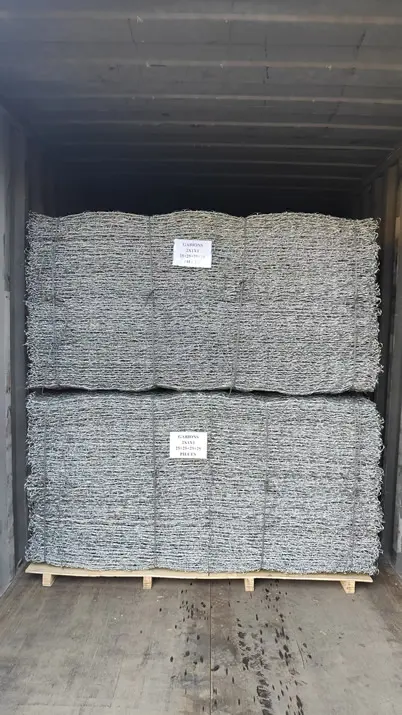
Gabion mattresses, also known as Reno mattresses, are shallow, wide gabion structures typically ranging from 0.15m to 0.3m in height. Their unique design makes them ideal for covering large areas while conforming to irregular riverbed contours. Unlike standard gabion baskets, mattresses provide extensive coverage with minimal vertical profile.
(H2) Key Applications in Riverbed Protection
1. Riverbank Revetment
Prevents lateral erosion along river bends
Protects adjacent infrastructure from undermining
Maintains channel alignment during flood events
2. Channel Lining
Controls scour in high-velocity sections
Reduces sediment transport downstream
Stabilizes bed elevation fluctuations
3. Outlet Protection
Dissipates energy from culverts and drainage pipes
Prevents localized scour at structure outlets
Maintains channel integrity below discharge points
4. Grade Control Structures
Creates stable bed levels along river gradients
Prevents head-cutting and upstream erosion
Maintains designed channel slopes
(H2) Technical Specifications for Riverbed Applications
Standard Dimensions:
Thickness: 0.17m, 0.23m, 0.30m (most common)
Width: 2.0m standard (custom widths available)
Length: 2.0m to 6.0m (typically 3.0m or 4.0m)
Mesh Configuration:
Aperture Size: 60×80mm or 80×100mm (hexagonal)
Wire Diameter: 2.2mm to 3.0mm (depending on design loads)
Coating Options: Galvanized, Galfan, or PVC-coated
Diaphragm Spacing:
Internal partitions every 1.0m for stability
Prevents stone migration within mattress
Maintains uniform thickness during installation
(H2) Design Considerations for River Environments
Hydraulic Calculations:
Determine design flow velocities (typically 3-5 m/s)
Calculate expected shear stresses
Size mattresses accordingly for stability
Foundation Preparation:
Excavate to stable subgrade material
Grade to design elevation and slope
Compact foundation to prevent settlement
Filter Requirements:
Geotextile fabric beneath mattresses
Prevents soil migration through mattress
Maintains soil structure while allowing drainage
(H2) Installation Methodology
Phase 1: Site Preparation
Clear vegetation and debris from work area
Excavate to required depth and slope
Install geotextile filter fabric with overlaps
Verify grades and alignment
Phase 2: Mattress Placement
Position mattresses sequentially from downstream end
Connect adjacent units with spiral binders
Ensure tight abutment between mattresses
Secure to bank transitions and structures
Phase 3: Filling Procedure
Place stones carefully to avoid damaging coating
Fill compartments uniformly in 1/3 increments
Hand-place stones along edges for clean lines
Overfill slightly to account for settlement
Phase 4: Final Connections
Install lid panels and secure with binders
Check alignment and elevation
Backfill edges as required
Inspect completed installation
(H2) Advantages Over Alternative Solutions
Compared to Concrete Linings:
Flexibility: Accommodates settlement and movement
Permeability: Allows natural groundwater exchange
Cost-Effectiveness: Lower installation and maintenance costs
Environmental Compatibility: Supports vegetation growth
Compared to Riprap:
Stability: Superior resistance to high velocities
Durability: Longer service life with proper installation
Uniformity: Consistent performance across entire area
Maintenance: Reduced ongoing maintenance requirements
(H2) Environmental Benefits
Ecological Integration:
Allows natural vegetation establishment
Maintains aquatic habitat connectivity
Supports benthic organism colonization
Blends with natural surroundings over time
Sustainable Aspects:
Uses natural stone fill materials
Permeable design maintains hydrological balance
Can be constructed with local materials and labor
Minimal carbon footprint compared to concrete alternatives
(H2) Case Study: Successful Riverbed Application
Project: Yangtze River Tributary Protection
Challenge: Severe bank erosion threatening agricultural land
Solution: 2.3km of gabion mattress revetment (0.23m thickness)
Results:
Erosion completely eliminated
Natural vegetation established within 2 years
30% cost savings compared to concrete alternative
No maintenance required after 5 years of service
(H2) Maintenance and Monitoring
Routine Inspection Schedule:
Post-installation: 3-month and 12-month inspections
Annual: Check for settlement or deformation
After major flood events: Immediate damage assessment
Common Maintenance Issues:
Sediment accumulation requiring removal
Vegetation management if necessary
Minor repairs to damaged sections
Stone replenishment if settlement occurs
(H2) Cost Considerations
Factors Influencing Cost:
River accessibility and site conditions
Stone availability and transportation
Labor costs and local wage rates
Project scale and mattress specifications
Typical Price Range:
Materials: $15-25 per square meter
Installation: $10-20 per square meter
Total Installed Cost: $25-45 per square meter
(H2) Professional Implementation Recommendations
When to Use Gabion Mattresses:
Moderate to high velocity river environments
Projects requiring ecological compatibility
Sites with limited access for heavy equipment
Budget-conscious erosion control solutions
When to Consider Alternatives:
Extremely high velocity conditions (>6 m/s)
Sites with significant debris impact potential
Applications requiring rigid structural elements
Projects with specialized architectural requirements
Gabion mattresses offer a proven, cost-effective solution for riverbed protection that balances engineering requirements with environmental considerations. Their flexibility, durability, and ecological benefits make them an ideal choice for sustainable river management.
Contact our engineering team for site-specific recommendations and technical support for your riverbed protection project.

ANPING YUELIAN WIRE MESH CO.,LTD.
+86 13363336085
yxgabion@163.com
NO.5 WEIYI ROAD,ANPING HIGH-TECH INDUSTRIAL DEVELOPMENT ZONE,ANPING,HENGSHUI,HEBEI,CHINA
For inquiries about our products or pricelist, please leave your email to us and we will be in touch within 24 hours.
INQUIRY NOW