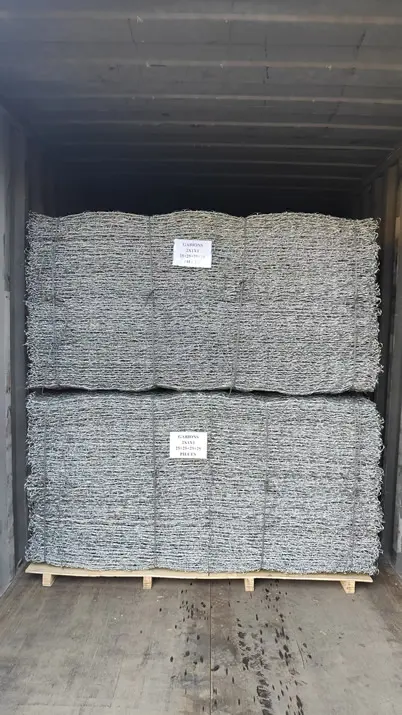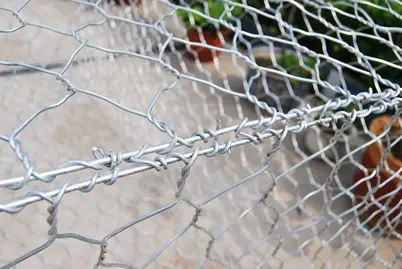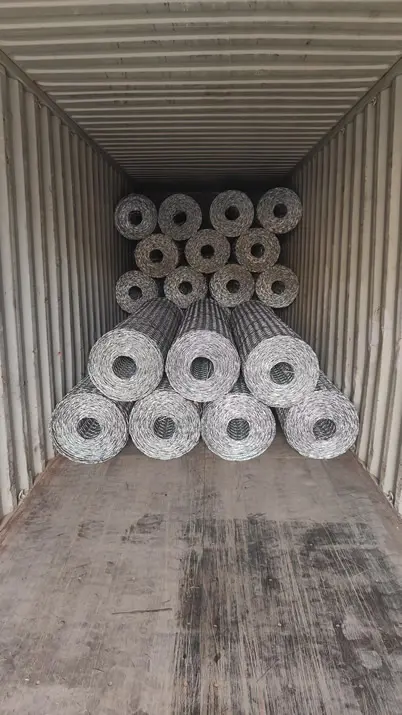
Classification of materials for galvanized lead wire cages:
1. Galvanized steel wire
High quality low-carbon steel wire is used, with a diameter range of 2.0 millimeters to 4.0 millimeters and a tensile strength of not less than 380 megapascals. The surface is treated with hot-dip galvanizing, and the thickness of the galvanized layer can be customized according to customer needs, with a maximum galvanizing amount of 300 grams per square meter.
2. Zinc 5% Aluminum Mixed Rare Earth Alloy Steel Wire (Galfan)
This is a new type of material widely used internationally in recent years, and its corrosion resistance is more than three times that of traditional pure galvanizing. The diameter range of the steel wire is 1.0 mm to 3.0 mm, and the tensile strength is not less than 1380 megapascals.
3. Galvanized steel wire coated with plastic
Using high-quality low-carbon steel wire as the base material, wrapped with a layer of PVC protective layer on the surface, and then woven into various specifications of hexagonal mesh. This PVC protective layer can significantly enhance its protective performance in highly polluted environments, and can achieve natural integration with the surrounding environment through multiple color choices.
4. Zinc 5% Aluminum Mixed Rare Earth Alloy Steel Wire Coating
On the basis of zinc-5% aluminum-mixed rare earth alloy steel wire, a layer of PVC protective layer is wrapped on the surface, and then woven into a hexagonal mesh. This structure further enhances durability in highly polluted environments, while providing multiple color options for easy coordination with the surrounding environment.
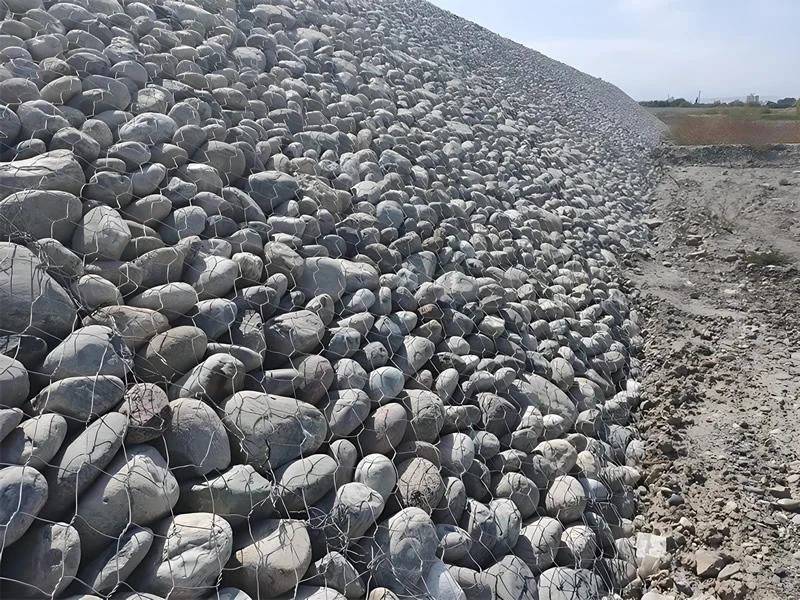
Characteristics of galvanized lead wire gabion mesh:
1. Economical and practical
Simply put the stones into the cage and seal it to complete the construction, with low cost.
2. Convenient construction
Without the need for special skills, ordinary workers can quickly complete the installation.
3. Corrosion resistance and resistance to harsh weather conditions
Has excellent resistance to natural damage and can withstand harsh weather conditions and corrosive environments.
4. Strong and stable
It can withstand a large range of deformation without collapsing and has high structural stability.
5. Eco friendly
The silt in the crevices helps plants grow and gradually integrate with the surrounding natural environment.
6. Good permeability
Has excellent drainage performance, effectively preventing structural damage caused by hydrostatic forces.
7. Convenient transportation
Foldable transportation and on-site assembly significantly save transportation costs and space.

ANPING YUELIAN WIRE MESH CO.,LTD.
+86 13363336085
yxgabion@163.com
NO.5 WEIYI ROAD,ANPING HIGH-TECH INDUSTRIAL DEVELOPMENT ZONE,ANPING,HENGSHUI,HEBEI,CHINA
For inquiries about our products or pricelist, please leave your email to us and we will be in touch within 24 hours.
INQUIRY NOW