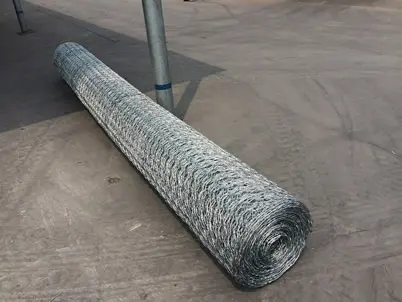
Gabion mesh used for slope protection varies significantly in quality on the market.Some small workshops attract buyers with low prices but supply substandard products.
While this may seem cost-effective at first, it can create serious safety risks in slope protection projects.Understanding these risks helps buyers avoid common procurement mistakes.
Low-grade or recycled steel wire is often used.
This results in low tensile strength, making the mesh prone to breaking under load.
The zinc coating is often too thin or uneven.
In some cases, electro-galvanized wire is used instead of hot-dip galvanized wire.
This leads to rapid corrosion and loss of protective performance in a short time.
5 secrets and material selection guidelines for rust prevention treatment of gabion mesh
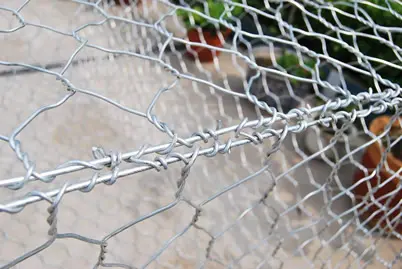
The mesh structure is often loosely woven with inconsistent openings.
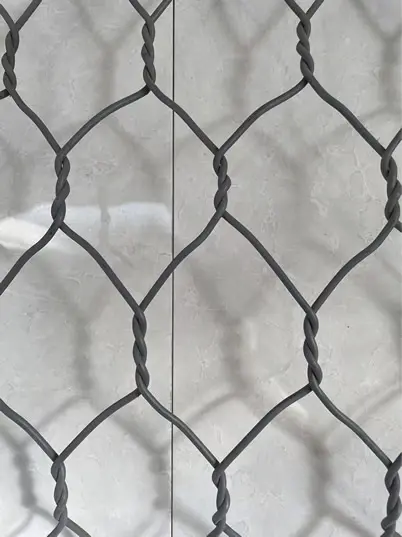
Single-twist structures may be used instead of double-twisted mesh.
Under stress, the mesh can deform, loosen, or allow stones to escape.
Quality Comparison Table
| Factor | Low-Quality Gabion Mesh | Standard Gabion Mesh |
|---|---|---|
| Wire Material | Recycled or low-grade steel | High-quality steel wire |
| Tensile Strength | Low, prone to breakage | Meets engineering standards |
| Zinc Coating | Thin, uneven, or electro-galvanized | Thick, uniform hot-dip galvanized |
| Corrosion Resistance | Poor, short-term performance | Long-term durability |
| Weaving Structure | Loose or single twist | Double twisted, stable |
| Mesh Uniformity | Inconsistent openings | Consistent and controlled |
| Service Life | Short | Long-term performance |
| Project Risk | High risk of failure | Reliable and stable |
Our products are CE certified and manufactured under strict quality control standards.
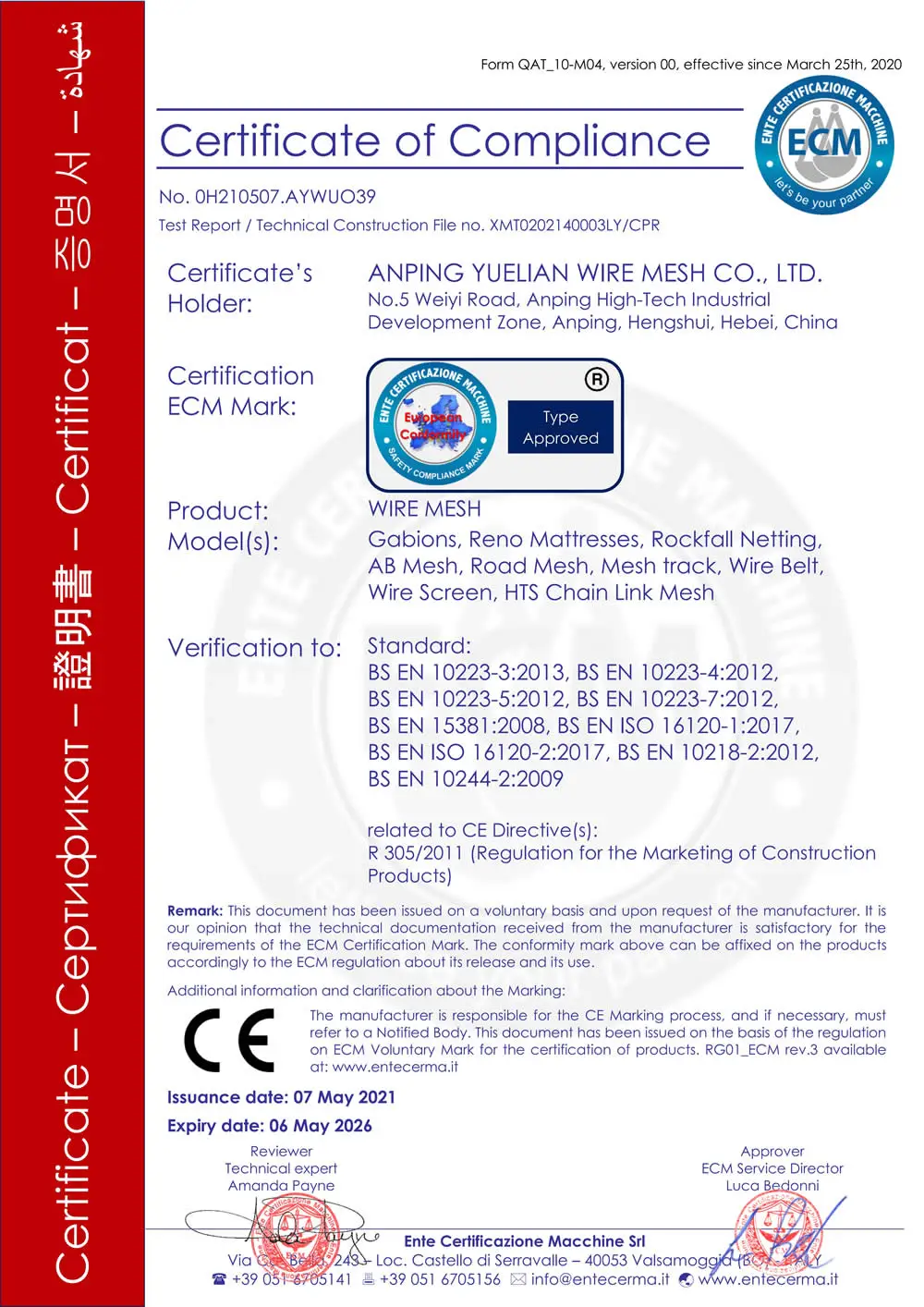
ANPING YUELIAN WIRE MESH CO.,LTD.
+86 13363336085
yxgabion@163.com
NO.5 WEIYI ROAD,ANPING HIGH-TECH INDUSTRIAL DEVELOPMENT ZONE,ANPING,HENGSHUI,HEBEI,CHINA
For inquiries about our products or pricelist, please leave your email to us and we will be in touch within 24 hours.
INQUIRY NOW